Sri Lanka's Ancient Irrigation Technology: The 30,000 Tanks That Baffled Modern Engineers
From the vast Parakrama Samudraya to the world's oldest sluice gate at Maduru Oya, discover how Sri Lanka's ancient irrigation technology built a hydraulic civilisation more than a thousand years ahead of its time.
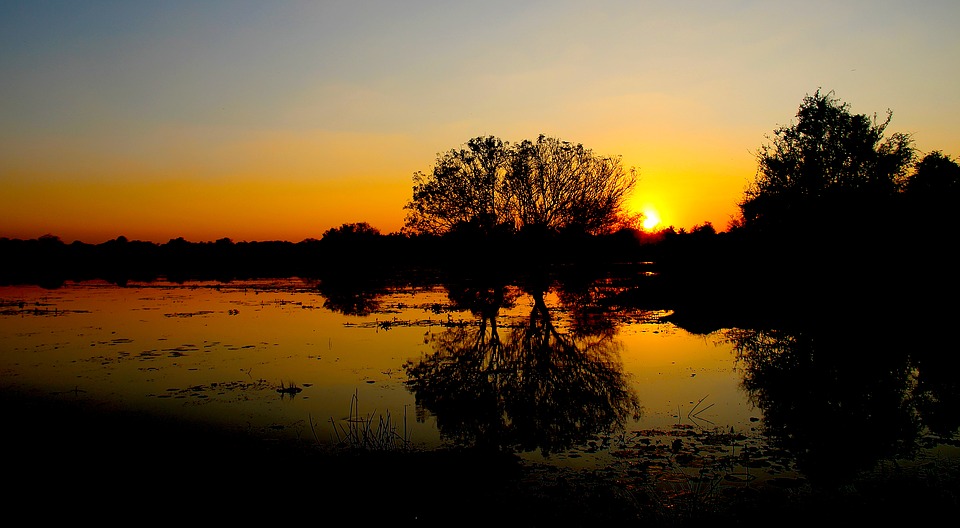
How many things in the world are truly unique to a single country? Sri Lanka has one wondrous treasure it can proudly show the whole world: the Parakrama Samudraya—the "Sea of Parakrama." And it is not alone. Scattered across this small island are more than 30,000 ancient tanks (reservoirs), an unbroken network of hydraulic engineering that predates most of Europe''s medieval castles.
So where did Sri Lanka's ancient irrigation technology come from? Some people get it wrong. Some get it confused. But the truth, written into the earth itself, is that this technology belongs to Sri Lankans—developed, refined, and perfected on this island over more than two millennia.
In this article, we take a closer look at the ingenious Hela (indigenous Sri Lankan) technology that shaped an entire civilisation—and the remarkable 1981 discovery that stunned a team of Canadian engineers.
A Land of Water Wonders
Sri Lanka is home to some of the world''s earliest and most sophisticated technological creations. If you research the island seriously and take a deep dive into its engineering heritage, the evidence lies bare before your eyes. This is a country with a wonderfully proud heritage. The only real question is whether the people of today still feel that pride.
The ancient kings of Anuradhapura and Polonnaruwa built a hydraulic civilisation on a single guiding principle attributed to King Parakramabahu the Great:
"Not even a little water that comes from the rain must flow into the ocean without being made useful to man."
To honour that promise, they created a network of reservoirs, canals, sluices and bisokotuwa (valve towers) that still function today.
The 1981 Discovery That Shocked Canadian Engineers
Let''s travel back to August 1981—a time when reservoirs were on everyone''s lips in Sri Lanka. The government of the day invited a Canadian engineering firm to survey the country and identify the ideal location for a new modern reservoir as part of the Accelerated Mahaweli Development Programme.
The Canadian team travelled across the island looking for the perfect site to build a tank bund and a sluice gate. After weeks of surveys, they made their choice.
Where did they select? Travelling past Polonnaruwa, through Aralaganwila, and heading towards the Mahaweli region, they arrived at what is now the Maduru Oya Reservoir. The site, they concluded, was ideal for the modern sluice gate they intended to build.
Then excavation began—and the engineers uncovered something that changed everything.
Buried beneath the earth, at the exact spot their modern instruments had chosen, was an ancient sluice gate. Not just any sluice gate—arguably the oldest surviving sluice gate in the world, engineered by Sri Lankan hands more than 1,500 years earlier.
The Canadians had, quite literally, been beaten to the answer by a millennium and a half.
According to the Mahavamsa, this may be the Maha Dharagalla tank, originally built by King Mahasen and later renovated by King Vijayabahu I and King Parakramabahu the Great.
The Parakrama Samudraya: A Sea Made by a King
Let''s not call these constructions "tanks"—the English word barely does them justice. But let''s not call them "seas" either. What they are is something in between: man-made inland waters so vast that they irrigate entire districts.
The Parakrama Samudraya in Polonnaruwa is the crown jewel. Built in the 12th century by King Parakramabahu the Great, it covers approximately 2,500 hectares, holds around 134 million cubic metres of water, and is fed and drained by a network of canals whose gradients are so precise that modern surveyors still study them.
Sri Lanka's Tank Cascade System at a Glance
| Feature | Detail |
|---|---|
| Total ancient tanks in Sri Lanka | Over 30,000 |
| Oldest known sluice gate | Maduru Oya (rediscovered 1981) |
| Largest ancient reservoir | Parakrama Samudraya (~2,500 ha) |
| Key invention | Bisokotuwa (valve pit / cistern sluice) |
| Approx. earliest tank | Basawakkulama, ~4th century BCE |
| UNESCO recognition | Ancient City of Polonnaruwa (World Heritage) |
The Bisokotuwa: An Invention 1,500 Years Ahead of Its Time
The single greatest breakthrough in Sri Lanka's ancient irrigation technology was the bisokotuwa—a valve tower built into the wall of the reservoir. It regulated the pressure of water flowing out through the sluice, preventing the earthen dam from being torn apart.
Europe would not develop an equivalent device until the late 18th century. Sri Lankans were already using them in the 1st or 2nd century CE.
Why the Bisokotuwa Matters
- Controlled water pressure to protect the dam
- Allowed release of huge volumes with minimal erosion
- Enabled tanks to grow to enormous sizes safely
- Made continuous, calibrated irrigation possible
Hela Medicine: The Other Forgotten Technology
Irrigation is only part of the story. The same civilisation that mastered water also perfected an indigenous system of medicine known as Hela Vedakama—Sri Lankan traditional healing.
Among its many techniques was Sweda Karma (sudation or sweat therapy), practised in two main forms:
- Saagniya (with fire) – 13 recognised methods, including applying heated bundles of crushed medicinal herbs to the body.
- Niragniya (without fire) – 10 recognised methods, using pressure, movement and natural warmth.
Evidence survives across the island in the ruins of ancient hospitals, where you can still see the "beheth oru" (medicinal troughs)—large stone vessels carved from single blocks. Monk-physicians filled these with medicated water, heated the mixture and used the vapour and immersion for healing. Some of the finest examples can be seen at the ancient hospital of Mihintale.
How to Explore Sri Lanka's Ancient Engineering on Your Trip
You do not need to be a historian to feel the weight of this achievement. A well-planned itinerary through the Cultural Triangle puts you face-to-face with the tanks, sluices and hospitals that built the civilisation.
The Essential Hydraulic Heritage Trail
- Anuradhapura – See the earliest tanks: Basawakkulama, Tissa Wewa and Nuwara Wewa.
- Mihintale – Walk through the ruins of the ancient hospital and its medicinal troughs.
- Polonnaruwa – Stand on the bund of the Parakrama Samudraya at sunset.
- Maduru Oya – Visit the site of the 1981 discovery, near Aralaganwila.
- Sigiriya & Dambulla – Combine rock fortresses and cave temples with the surrounding tank landscape.
For a ready-made route, see our guide to planning a road trip around Sigiriya, Dambulla and Polonnaruwa, or explore easy day trips from Colombo if you are short on time.
Best Time to Visit the Tank Country
| Season | Months | What to Expect |
|---|---|---|
| Dry season (best) | May – September | Clear skies, low water levels expose ancient stonework |
| Shoulder | February – April | Warm, green landscape, fewer crowds |
| North-east monsoon | October – January | Full tanks, lush scenery, occasional heavy showers |
Plan Your Journey With Local Experts
The tanks, sluices and ancient hospitals of Sri Lanka are best explored with a guide who can translate the stones back into stories. Serendipity Tours designs private, culturally rich itineraries around Sri Lanka''s hydraulic heritage—from Anuradhapura and Polonnaruwa to Maduru Oya and beyond.
Want to combine ancient engineering with wildlife? Consider the 2-Day Wildlife Tour to the Rainforest National Park, or browse the full range of experiences at serendipitypvt.com.
The Cycle Continues
It comes, it exists, it goes. This is the nature of all things—the cycle of cosmic evolution, stasis and devolution. Civilisations rise and fall, but the water still flows through these ancient stones, feeding paddy fields today just as it did a thousand years ago.
That, perhaps, is the greatest testament to Sri Lanka's ancient irrigation technology: not that it was built, but that it still works.
Reader reviews
No reviews yet — be the first to share your experience.