Yala National Park Overnight Stay: How to Sleep Inside Sri Lanka's Wildest Reserve—and Live to Tell the Tale
A night inside Yala National Park, Sri Lanka's leopard capital, is one of the rawest wildlife experiences in Asia. Here's how to book a bungalow or campsite inside the park, what to expect after dark, and how to do it safely.
Dawn in Yala National Park does not arrive politely. It arrives on the back of a peacock scream — a long, brassy shriek that ricochets between the palu trees and the granite kopjes and finally spills across the lagoon behind our bungalow. My tracker, Sanjaya, does not even open his eyes. "Leopard nearby," he mutters from the next chair over. "Peacocks always tell you first."
He is not being dramatic. Yala's Block I, where I have just spent the night, holds one of the highest densities of leopards on Earth — roughly one animal per square kilometre by most recent surveys. Elephants shuffle past the perimeter fence at 3 a.m. Sloth bears crash through the bael thickets. A rusty-spotted cat, one of the world's smallest wild felines, was photographed on a camera trap fifty metres from where I am now drinking my first cup of Ceylon tea.
Most visitors to Sri Lanka see Yala the same way: a bumpy pre-dawn drive from a beach hotel in Tissamaharama, a four-hour game drive, lunch, and out. What almost nobody does — what changes the park entirely — is stay inside it after the gates close.
Why an overnight stay inside Yala changes everything
Yala is 979 square kilometres of dry-zone scrub, brackish lagoons, and monsoon forest wedged into Sri Lanka's southeast corner. Only five of its blocks are open to tourists, and even then the department of Wildlife Conservation caps how many vehicles enter at any one time. By 6 p.m. the last jeep has been chased out of the gate at Palatupana. What remains is the park as the animals actually use it — quiet, unlit, and full of eyes.
Sanjaya has been guiding here for eleven years. "Day visitors see maybe two percent of what happens in Yala," he tells me as we sit on the veranda watching a lone tusker feed on the far side of the lagoon. "Leopards hunt at dusk. Elephants come to water at night. Sloth bears eat palu fruit in the moonlight. If you leave at six, you leave right when the park wakes up."
He is right. On my single overnight I saw more wildlife between 5 p.m. and 8 a.m. than I did across two full day-drives on either side.
The three ways to sleep inside Yala National Park
Sleeping inside the reserve is legal, well-organised, and — provided you follow the rules — safe. There are three distinct options, ranging from spartan to seriously luxurious.
1. Department of Wildlife Conservation bungalows
Six government bungalows sit deep inside the park: Talgasmankada, Heenwewa, Patanangala, Buttawa, Mahaseelawa, and Warahana. Each has two to three rooms, a resident cook you provision, running water, and — crucially — no fence. Rates for foreigners are around USD 45 per adult per night plus park entry, tracker, and service fees. They must be booked in person or through a licensed operator at the DWC office in Colombo, typically months ahead for the December–March high season.
2. Licensed campsites
A handful of registered private operators run mobile safari camps on designated clearings inside Blocks 1, 3, and 5. Bell tents come with proper beds, ensuite bucket showers, and a chef cooking curry over an open fire. You are still inside the park, still fenceless, but with dinner served under an oil lamp and a ranger on watch through the night. This is the sweet spot for most travellers.
3. Luxury tented lodges on the boundary
A small cluster of high-end lodges — Wild Coast, Chena Huts, Leopard Trails — sit immediately outside the park boundary. Technically not inside Yala, but close enough that elephants routinely walk through the property. Comfortable, air-conditioned, and dramatically pricier.
What a night inside Yala actually looks like
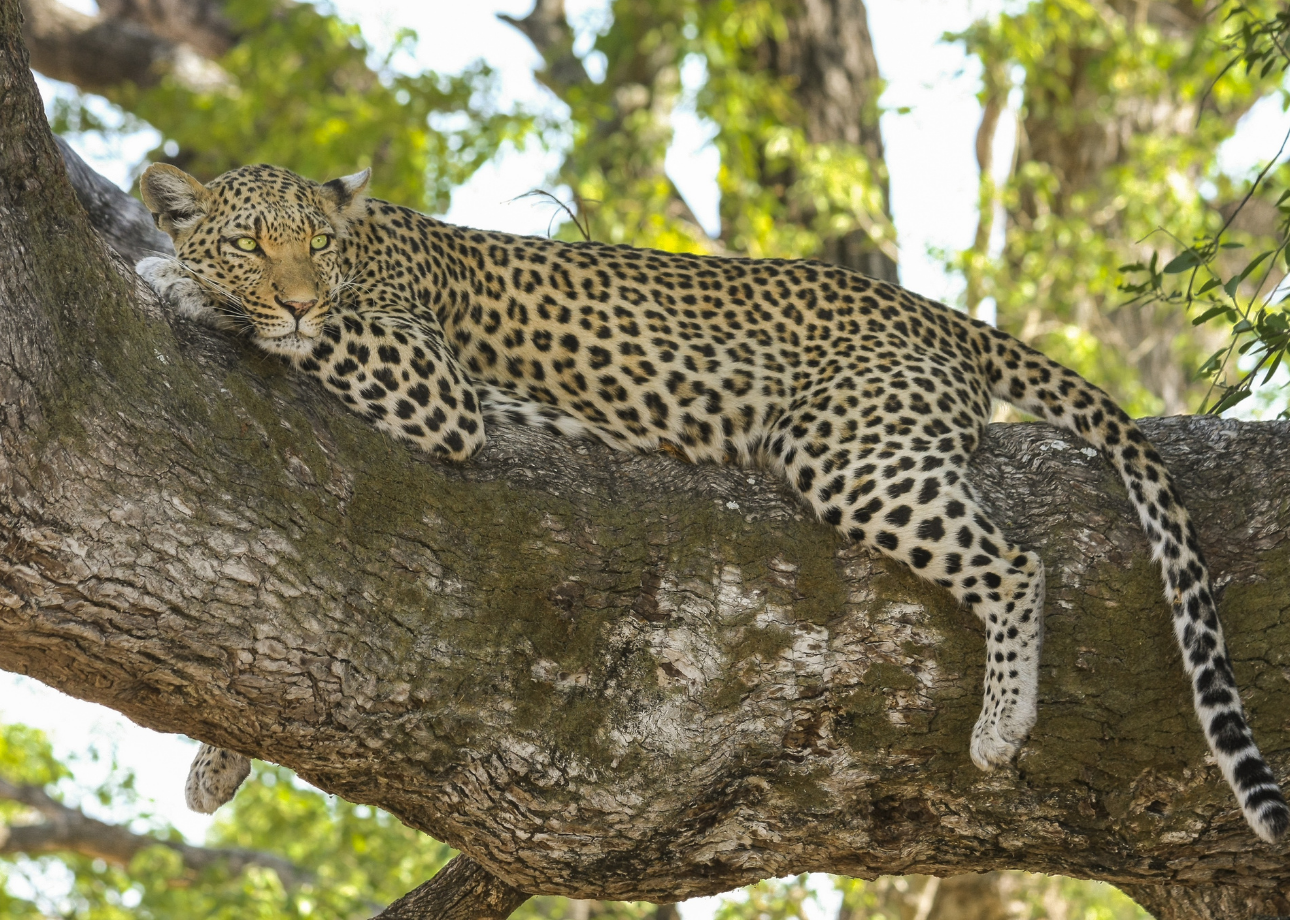
I arrived at Palatupana gate at 2 p.m. — early enough for a full afternoon drive on the way to camp. Within twenty minutes we had watched a herd of thirty elephants cross the road ahead of the jeep, calves tucked between their mothers' legs. An hour later, on a rocky outcrop above Buttawa lagoon, Sanjaya cut the engine. "Look at the branch. Left side of the tamarind." A young female leopard was draped along a limb, one paw hanging, eyes half-closed. We watched her for forty minutes. Not another vehicle passed.
Camp itself was a semicircle of bell tents in a clearing forty metres from a waterhole. A ranger with a rifle — for warning shots, never to kill — walked us the fifteen metres from the fire to our tents after dinner. Rule number one, he explained: do not leave the tent at night. If you need the bathroom, use the ensuite. If you hear something outside, stay inside. If you smell elephant (they smell like wet hay and dust), definitely stay inside.
Rule number two: no food, no toothpaste, no scented anything in the tent. Everything goes in a locked steel trunk at the kitchen.
Rule number three: zip the tent all the way, top to bottom. Monkeys know how to work a zipper. So do porcupines.
At 11 p.m. I woke to something breathing on the other side of the canvas. Long, slow, deliberate breaths. I lay perfectly still. In the morning the tracks in the dust ten centimetres from my tent wall told the story — a bull elephant, drinking at the waterhole, had walked past to feed on kolon leaves behind the camp. He was there for perhaps forty minutes. He never touched a guy-rope.
The wildlife you will meet after dark
Yala after sunset belongs to different animals than Yala at midday. Some to look for, some to respect:
- Sri Lankan leopard (Panthera pardus kotiya) — the park's headline act. Most sightings still happen at dawn and dusk from a jeep, but overnight guests often hear rasping "sawing" calls from the tent.
- Sloth bear — shy, myopic, and unpredictable. June and July, when the palu fruit ripens, is the best chance. Never on foot.
- Asian elephant — around 300–400 resident in the greater Yala complex. Bulls in musth are the single biggest hazard in the park; jeeps give them at least 50 metres.
- Mugger crocodile — sunning on every lagoon edge. The five-metre individuals at Buttawa are the largest reptiles most visitors will ever see.
- Jungle cat, fishing cat, rusty-spotted cat — three small cats that only really move after dark.
- Nightjars, Indian scops owls, brown fish owls — a spotlight sweep from camp usually turns up at least one.
When to go — and when absolutely not to
| Season | Weather | Wildlife | Verdict |
|---|---|---|---|
| February – June | Hot and dry | Best leopard sightings; waterholes concentrate everything | Prime |
| July – August | Very hot, some rain | Sloth bears on palu fruit | Excellent for bears |
| September | Park usually closed | Annual maintenance closure of Block I | Avoid — check dates |
| October – January | Northeast monsoon rains | Lush; birds abundant; tracks muddy | Green and quiet |
Block I typically closes for the entire month of September for habitat regeneration; dates shift each year, so confirm with the DWC or your operator before booking.
How to book — and what it costs
Rough per-person guide for a one-night, two-day stay including transfers from Colombo, jeep, tracker, park fees, meals, and accommodation inside the park:
- DWC bungalow, self-provisioned: USD 180–260 pp
- Licensed camping operator: USD 350–550 pp
- Luxury boundary lodge: USD 700–1,400 pp
Foreign visitor park entry is around USD 30 per adult per day, plus jeep, tracker, and service fees layered on top. All permits, whether you are day-visiting or staying overnight, must be arranged by a licensed operator — you cannot simply drive up and book at the gate.
The easiest way to arrange the paperwork, transport, driver-guide, and tracker as a single package is through a Sri Lankan ground operator. Serendipity Tours runs Yala overnight itineraries as well as shorter tasters — including their popular One Day Yala Safari from Colombo, useful if you only have a single free day in your Sri Lanka itinerary. Their team handles DWC permits, licensed jeeps, and English-speaking naturalists.
What to pack for a night in the park
- Neutral, earth-tone clothing (no white, no bright colours)
- Long sleeves and long trousers for dawn and dusk — mosquitoes are relentless near lagoons
- A proper head torch with red-light mode
- DEET-based repellent and a small tube of antihistamine cream
- Binoculars — the single most useful piece of kit you can bring
- A soft duffel; hard suitcases don't fit in the back of a safari jeep
- Cash in rupees for tips (tracker and cook expect USD 5–10 each)
Rules that keep you alive
- Never leave the vehicle inside the park except at designated points (Patanangala beach, Situlpahuwa, the Menik Ganga picnic spot).
- Never leave the tent or bungalow at night, for any reason.
- Never approach an elephant on foot, even a "small" one. Yala elephants are wild, not habituated.
- No drone flights — they are illegal inside Sri Lanka's national parks and will get your permit revoked.
- If a leopard is spotted, keep voices to a whisper and engines idle. Do not ring other jeeps to crowd the sighting.
Combine Yala with the rest of the south
Yala pairs naturally with the beaches and whale-watching of the deep south. Most travellers slot it into a wider loop that also covers Galle Fort, the surf towns of Weligama and Ahangama, and blue-whale season out of Mirissa (December to April).
If you have longer, look at combining Yala with the cultural triangle — Sigiriya, Dambulla, and Polonnaruwa — or with a second safari at Wilpattu or Udawalawe. Two of our related guides go deeper:
- Sri Lanka Safari Tours: Skip Kenya or Tanzania for a Safari in This Less-Travelled Country
- Top 6 Most Visited National Parks in Sri Lanka
- Road Trip Around Sigiriya, Dambulla and Polonnaruwa: The Complete 4-Day Guide
- One Day Trip Places from Colombo
Frequently asked questions
Is it safe to stay overnight in Yala National Park?
Yes, if you go with a licensed operator, sleep inside a DWC bungalow or a permitted camp, and follow the rangers' instructions. Serious incidents are extremely rare and almost always involve people breaking the rules — leaving vehicles, approaching elephants on foot, or wandering out of tents at night.
How far in advance should I book?
For the December–March peak, four to six months. For DWC bungalows specifically, as far ahead as possible — they are limited and heavily oversubscribed.
Can I do Yala as a day trip from Colombo?
Yes. It's a long day — roughly 5 to 6 hours each way on the Southern Expressway — but a one-day Yala safari from Colombo is entirely feasible if an overnight doesn't fit your schedule.
What's the minimum age for children?
Most licensed camps set eight years old as a minimum for tented overnights inside the park, primarily because children need to be able to stay quiet and stay put after dark.
Is Yala malaria-free?
Sri Lanka was certified malaria-free by the WHO in 2016 and remains so. Dengue is present, however — cover up at dusk and use repellent.
The last word
You can visit Yala for four hours and still call it a good day out. The leopards oblige, the elephants pose, the crocodiles do their crocodile thing. But you will leave with the same photographs everyone else has.
Stay a night, and the park hands you something the day-trippers never see: the sound of a peacock warning the whole forest at 4 a.m., a bull elephant breathing on the other side of your canvas, a leopard rasping in the dark somewhere you cannot quite place. It's uncomfortable. It's not cheap. And it is, quietly, one of the greatest wildlife experiences left in Asia.
Ready to plan it? Talk to the team at Serendipity Tours about a tailored Yala overnight, or start smaller with their one-day Yala safari from Colombo.
Reader reviews
No reviews yet — be the first to share your experience.