16 Trails for a Sinharaja Forest Tour: The Complete Rainforest Trekking Guide
Plan the perfect Sinharaja forest tour with our full guide to the 16 trails, entrance points, wildlife, costs and the best time to visit Sri Lanka's UNESCO rainforest.
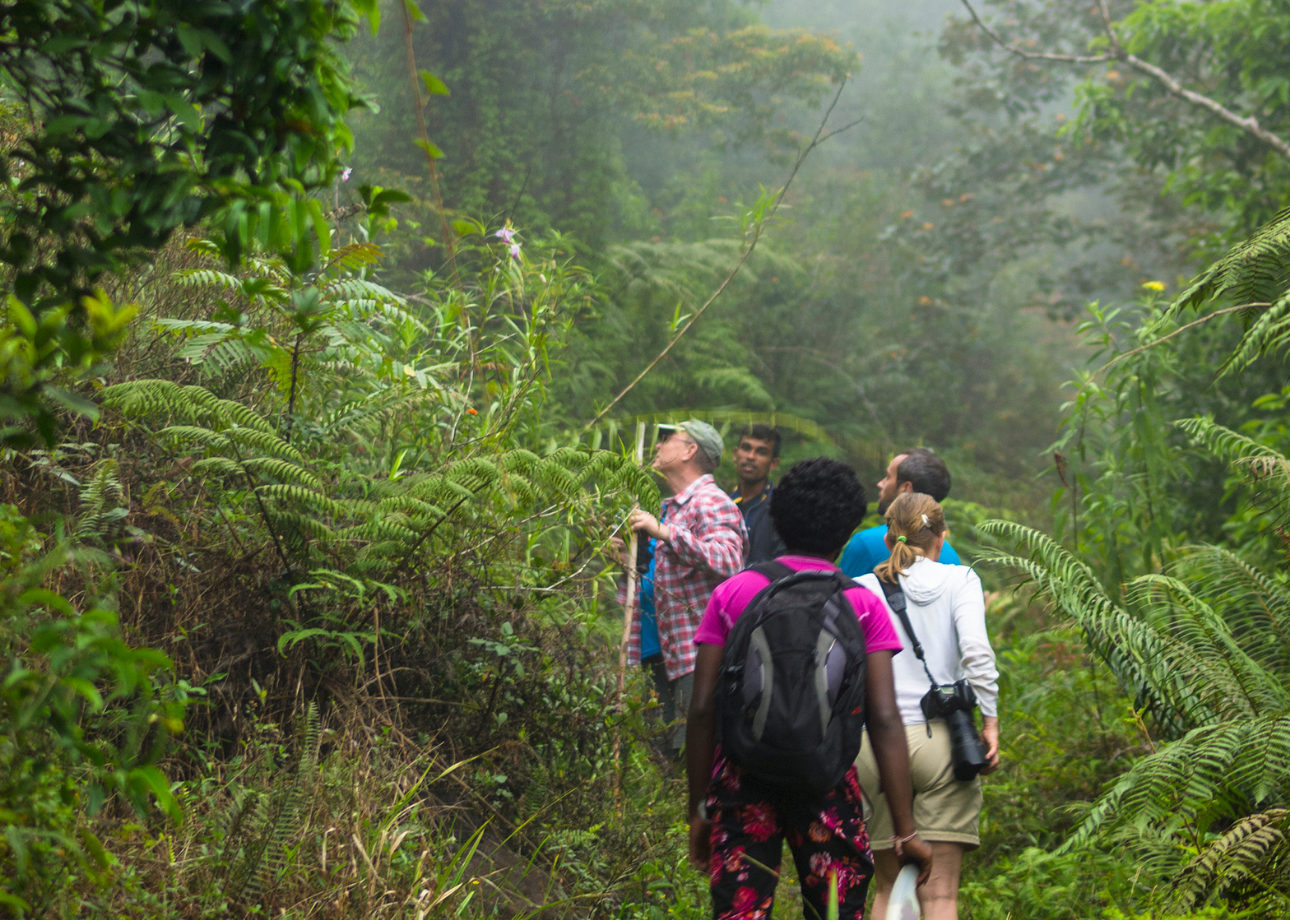
Set out on a misty morning and step into one of the oldest rainforests on earth. A Sinharaja forest tour is your chance to encounter towering tropical trees, endemic birds, monkeys, lizards, spiders, butterflies and dozens of other creatures found nowhere else on the planet. This guide covers the 16 trails for a Sinharaja forest tour, entrance points, the best time to go, costs and everything else you need to plan a smooth trip.
Why a Sinharaja forest tour belongs on your Sri Lanka itinerary
Sinharaja is the largest lowland rainforest in Sri Lanka and one of the last surviving fragments of the ancient Gondwana super-continent. It is a strict nature reserve, a UNESCO World Heritage Site (declared in 1988) and one of the top ten biodiversity hotspots in the world. Trekking here is easy to moderate, so anyone with reasonable fitness can enjoy it.
Under the dense canopy, sunlight barely reaches the forest floor. You will hear crickets, distant waterfalls and the calls of endemic birds, and don''t be surprised if a troop of purple-faced langurs suddenly crashes through the treetops overhead — this has been their home for millennia.
A short history of Sinharaja rainforest
Sinharaja was part of Gondwanaland and has been spared large-scale human interference for most of its existence. According to legend, it was the abode of a lion (sinha), which is how the forest got its name. The earliest written reference to Sinharaja comes from the 14th-century explorer Ibn Battuta, who walked past it on his pilgrimage to Adam''s Peak (Sri Pada). Today the reserve spreads over roughly 8,864 hectares (21,903 acres) between the Sabaragamuwa and Southern provinces.
Why choose Sinharaja for a rainforest tour in Sri Lanka?
If you want to experience a true tropical rainforest in Sri Lanka, nothing beats Sinharaja. It is the biggest rainforest on the island and the best equipped for visitors — the Department of Wildlife Conservation runs offices at the main entrances and provides trained guides, and accommodation nearby ranges from budget homestays to boutique eco-lodges. For a broader picture of the country''s landscapes and beaches, read our Sri Lanka travel guide.
Sinharaja rainforest tour from Colombo
Most travellers book the Sinharaja rainforest tour from Colombo as a long day trip. The tour typically starts around 6:30 AM and includes round-trip transfers, park entrance and a four-hour guided trek with an experienced nature guide. It pairs well with other short escapes — see our list of the best one-day trip places in Sri Lanka for ideas.
Sinharaja tour from a west or south coast beach resort
The same tour can be booked from 400+ beach hotels along the west and south coasts. Pickup times are similar (around 6:30 AM) and the package covers transport, tickets and the guided trek. If you''re already on the coast for a beach holiday, see our south-west Sri Lanka beach guide to build the perfect week.
Sinharaja rainforest trek: what to expect
You won''t have to travel far from the coast to swap sand for mist, streams and mossy boulders. Sinharaja offers dozens of trekking routes at every fitness level. The forest is warm and frequently rainy, but that''s exactly what keeps the canopy alive — isolated peaks, hidden waterfalls, clear rivers and a fascinating collection of fauna and flora are everywhere. Nineteen of Sri Lanka''s 26 endemic bird species live here, and the terrain still offers plenty of gentle challenges and big rewards.
Sinharaja package in a nutshell
- 07:00 AM — Leave Colombo
- 10:00 AM — Reach Weddagala entrance and start the trek
- 02:00 PM — Finish the trek and start the return drive
- 05:00 PM — Arrive back at your hotel in Colombo
When is the best time for a Sinharaja tour?
Annual rainfall in Sinharaja exceeds 5,000 mm. The main wet season runs from April to November. Despite leeches, slippery paths and near-daily downpours, the rainy months are considered the best time to visit — waterfalls swell, the forest floor turns vivid green and the wildlife is at its most active. The drier window from December to March is easier for first-time trekkers.
Historical and ecological importance
Sinharaja is the last remaining primeval rainforest in Sri Lanka and is believed to have originated around 180 million years ago, during the Gondwana super-continent. The IUCN World Heritage Conservation Outlook Assessment of 2020 classified Sinharaja as "significant concern", noting that although its ecological value has degraded over recent centuries, it remains an irreplaceable ecosystem and a critical habitat for globally threatened species.
Location and how to get there
Sinharaja sits between Sabaragamuwa and the Southern Province, and is best described as a low-altitude to sub-montane evergreen rainforest. The Kudawa entrance is 128 km from Colombo (about 3 hours via the Southern Expressway); the Mederipitiya entrance is 142 km from Colombo (around 3.5 hours).
Biodiversity of Sinharaja
Of the 217 endemic trees and woody climbers found in Sri Lanka''s lowlands, 139 species (64%) grow inside Sinharaja, and 16 are described as very rare. The reserve also protects endemic butterflies, amphibians, insects, reptiles and mammals — endemism among butterflies and mammals here is estimated at over 50%. Sightings of leopard, elephant and sloth bear are possible but extremely rare.
Common wildlife on a Sinharaja tour
- Indian elephant (Elephas maximus)
- Leopard (Panthera pardus)
- Sri Lanka wood pigeon (Columba torringtoniae)
- Purple-faced langur (Semnopithecus vetulus)
- Sri Lanka white-faced starling (Sturnornis albofrontatus)
- Sri Lanka blue magpie (Urocissa ornata)
- Sri Lanka broad-billed roller (Eurystomus orientalis irisi)
- Green-billed coucal (Centropus chlororhynchos)
- Ashy-headed laughingthrush (Garrulax cinereifrons)
Sinharaja forest entrance points
Most Sinharaja tours start from Kudawa or Weddagala in the north-west. The Pitadeniya (southern) entrance is preferred by travellers coming from the south coast and gives access to five spectacular waterfalls. The Mederipitiya gate is another popular southern access point.
The 16 trails for a Sinharaja forest tour
Here are the 16 trails for a Sinharaja forest tour — the complete network of routes rangers use to guide visitors through the reserve:
- A — Kudawa Conservation Centre to Wathurawa & Mulawella — The classic introduction to the forest, rich in birdlife.
- B — Kudawa Conservation Centre jeep track to Kudawa Research Station, Wathurawa and Mulawella — An easier walk on a wider track, ideal for photographers.
- C — Kudawa Conservation Centre to Mulawella Peak via the Nawanda Tree, connecting to Gal Len Yaya on the Sinhagala trail — A rewarding climb with viewpoints over the canopy.
- D — Kudawa Research Station to Sinhagala via the Sinhagala trail (from Kudawa) — A long, scenic hike into the heart of the reserve.
- E — Gal Len Yaya — Ancient cave shelters surrounded by primary forest.
- F — Sinhagala Peak — The legendary "Lion Rock" (740 m), with panoramic views over the treetops.
- G — Pitadeniya Conservation Centre — The southern entrance hub, great for waterfalls and river walks.
- H — Pitadeniya Ticket Counter starter walks — Short, family-friendly loops around the southern entrance.
- I — Mederipitiya to Pitadeniya Conservation Centre — A gentle transect through buffer villages and secondary forest.
- J — Kohila Aramba trail — Prime habitat for endemic reptiles and amphibians.
- K — Kekuna Ella and Pathan-Oya Ella waterfall trail — Two beautiful waterfalls on one moderate route.
- L — Pathan-Oya Ella to Sinhagala from Pitadeniya — The southern approach to Sinhagala Peak.
- M — Duwili Ella trail from Denuwakanda (Kosmulla) — Leads to the dramatic "dust waterfall".
- N — Morningside Conservation Centre to Duwili Ella — Through sub-montane grasslands and cloud forest.
- O — Morningside to the Natural Pool — A cool freshwater pool perfect for a mid-trek rest.
- P — Kosmulla via Duwili Ella to Siththara Gal Lena Cave — Combines a waterfall, forest and a rock-shelter cave with prehistoric significance.
What time should the trek start?
The ticket counters open at 6:00 AM. Aim to be walking by 7:30 AM at the latest. If you''re a serious birder, leave your hotel around 4:00 AM to hit the trail at first light — that''s when the endemics are most active.
Entrance fees and guides
Adult entrance: LKR 575. Children: LKR 295. Hiring a licensed forest guide is highly recommended and typically costs around LKR 1,500 per group. Guides are recruited from surrounding villages, know the forest intimately and are essential for spotting well-camouflaged wildlife — plus your fee supports local livelihoods.
Where to stay near Sinharaja
Accommodation is clustered around Kalawana, Weddagala, Deniyaya and Kudawa. You''ll find eco-lodges, guesthouses, rest houses, dormitories and community homestays — the last of these are the best-value option for budget travellers and offer an authentic slice of village life.
Combining Sinharaja with other Sri Lanka experiences
Sinharaja pairs beautifully with the country''s other highlights. Wildlife lovers can add a coastal add-on with our whale watching tour from Colombo, or a river cruise on the south-west coast — see our Bentota river safari guide. Cultural travellers can continue north to the ancient cities covered in our Cultural Triangle guide.
Book your Sinharaja forest tour
Seerendipity Tours is a Sri Lankan operator specialising in nature and adventure travel. To read more about Sinharaja packages, day trips and multi-day itineraries, visit seerendipitytours.com. For custom private tours, transfers and tailor-made travel arrangements across the island, see serendipitypvt.com.
Final thoughts
A Sinharaja forest tour is more than a hike — it''s a walk through 180 million years of natural history. Whether you tackle the easy Wathurawa loop or push all the way to Sinhagala Peak, the 16 trails of Sinharaja offer something for every traveller. Pack light, wear leech socks, bring binoculars and let one of Sri Lanka''s oldest living landscapes leave its mark on you.